





Anti-Money Laundering Policy at BC Poker
BC Poker applies transaction and identity controls to reduce misuse of its payment system and protect player balances. The policy combines verification, automated monitoring and manual reviews across deposits, withdrawals and gameplay activity. Read this page before funding your profile to understand how compliance checks may affect payments and prevent avoidable withdrawal delays.
Key Takeaways
- Transactions are reviewed for unusual patterns and higher risk activity.
- Identity checks confirm player ownership and payment control.
- Crypto addresses may be screened against international sanctions data.
- Suspicious cases can lead to enhanced due diligence or temporary restrictions.
Why AML Measures Matter for Player Safety
AML controls help distinguish normal poker activity from attempts to move, conceal or disguise funds through the platform. They reduce exposure to stolen payment details, false identities and deposits made on behalf of another person. BC Poker uses these checks to maintain a clear connection between the registered player, the funding source and the selected withdrawal method.
This process supports consistent handling of behaviour that differs from an established payment pattern. It also prevents the poker room from being used as an informal transfer service. These safeguards protect personal balances and support the stability of the wider payment environment.
How Transactions Are Monitored
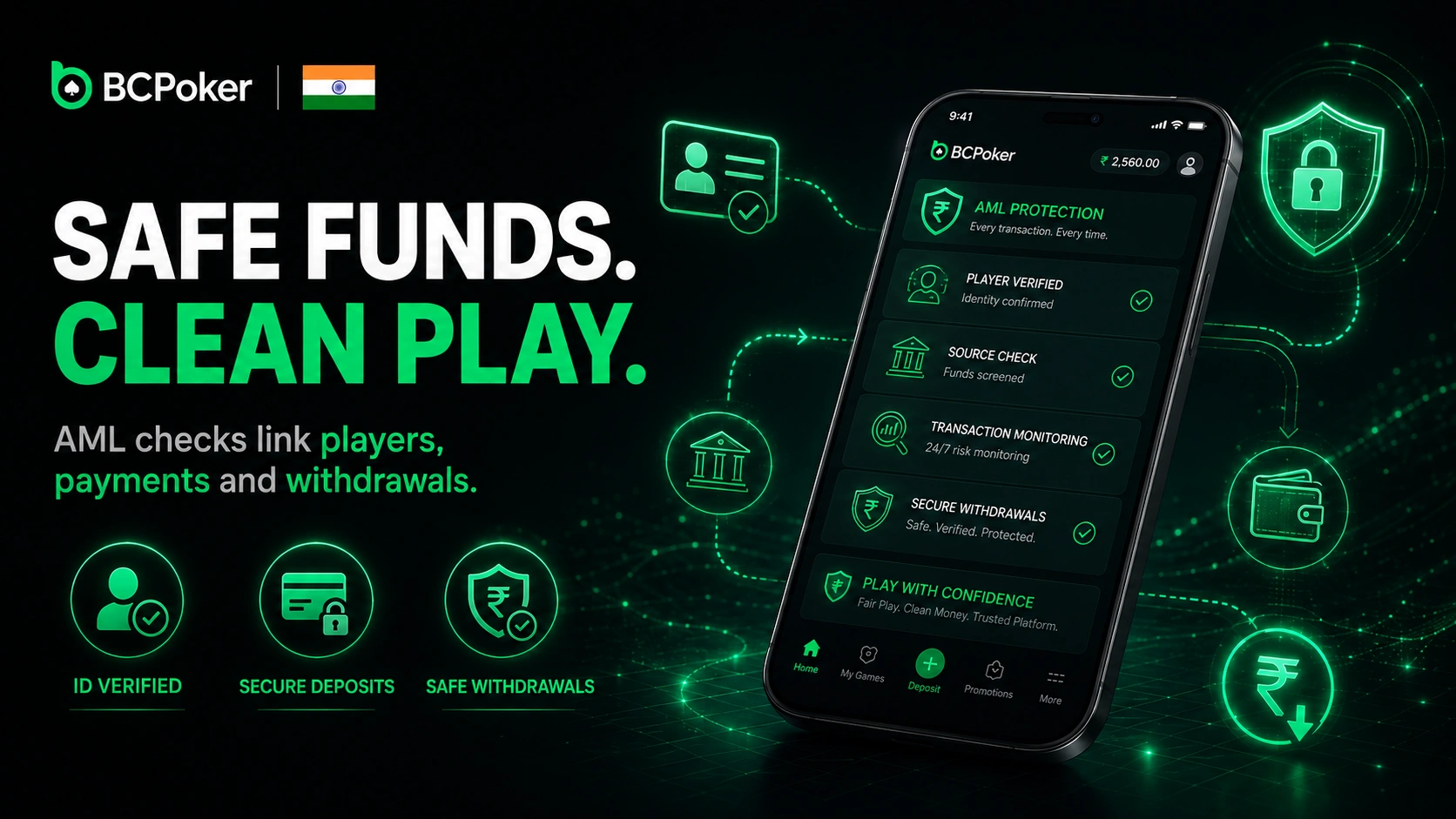
BC Poker monitors transactions in real time and uses automated indicators to identify activity requiring further review. The system evaluates deposits, withdrawals, payment routes and changes in player behaviour rather than relying on one isolated transaction. Review indicators may include:
- deposits that differ sharply from previous funding activity;
- sudden changes in transaction frequency or payment method;
- repeated payments that do not correspond with normal gameplay;
- crypto addresses connected with sanctions or compliance warnings.
An automated flag does not confirm that a violation has occurred. It starts a review before the relevant payment is accepted, processed or released. Compliance staff consider transaction history, available player data and the origin of the funds before making a decision.
Identity Verification as Part of AML Compliance
Identity verification connects financial activity to the person controlling the player profile. BC Poker may request a valid government issued document and personal details required to confirm ownership. Verification applies in several compliance situations.
| Player activity | Required compliance action |
| First withdrawal request | identity review before funds are released |
| Bonus application | verification before reward access |
| Large or irregular payment | enhanced due diligence and possible restriction |
| Crypto address warning | screening through blockchain compliance tools |
Submitted documents must be current, accurate and belong to the registered player. Using another person’s identity, wallet or payment method can interrupt processing and result in additional checks. A complete document set allows compliance staff to match the player, funding source and withdrawal destination without unnecessary inconsistencies.
Reporting Suspicious Activity
Suspicious activity is documented and escalated through the BC Poker compliance process. A payment may be paused while transaction history, funding routes and supporting information are examined. The assessment can follow these steps.
- Initial flag: monitoring tools detect behaviour outside the expected pattern.
- Player review: compliance checks transaction records and registration details.
- Enhanced due diligence: additional documents or explanations may be requested.
- Final decision: the payment is approved, rejected or followed by a restriction.
Players should provide complete and accurate information when supporting documents are requested. Attempts to hide payment ownership or the source of funds can extend the review. Customer support can collect relevant details, but compliance decisions remain subject to formal internal checks.